You have a brochure deadline coming up, three customers who said they might order, one delivery update to send, and a payment reminder that needs to be handled carefully. The difficult part is not just remembering who needs a nudge. It is wording each message so it feels helpful, warm and not pushy.
That is where AI customer reminders for beauty representatives can be useful. AI can help you draft clearer messages, soften wording, create reminder variations and turn messy notes into a simple follow-up list.
It should not take over the relationship. You still need to check the facts, decide whether the reminder is appropriate, and make sure the message sounds like you. Think of AI as a drafting assistant, not a customer relationship manager.
This article is practical workflow guidance only. It is not legal, financial, data protection or supplier compliance advice. Always follow your own supplier rules, business processes and judgement.
Quick answer: independent beauty representatives can use AI to draft polite reminder messages for brochure rounds, order deadlines, delivery updates and payment follow-ups. The safest approach is to use placeholders, keep sensitive customer information out of prompts, review every draft yourself and check all order, payment and delivery details against your own records before sending.
- Use AI for wording, structure and tone.
- Use your own records for customer details, orders, payments, delivery updates and supplier rules.
- Send only after you have edited the message so it sounds natural and appropriate.
Want the shortcut version? If you want ready-made beauty direct sales AI prompts and a practical reminder workflow packaged for UK independent representatives, the Starter AI Toolkit for Independent Beauty Representatives in Beauty Direct Sales (UK) gives you a simpler way to put this into practice without building every prompt from scratch.
Affiliate disclosure: This article may contain an affiliate link, which means SBA Shortcut Shelf may earn a commission, at no extra cost to you. If you want a simple way to keep brochure rounds, order deadlines, delivery updates and customer follow-up reminders visible, Todoist is one option to consider.
Why customer reminders are tricky in beauty direct sales
Customer reminders in beauty direct sales are rarely held neatly in one place. One customer may reply on WhatsApp, another by text, another through social messages, and another may tell you during a customer round that they will look at the catalogue later.
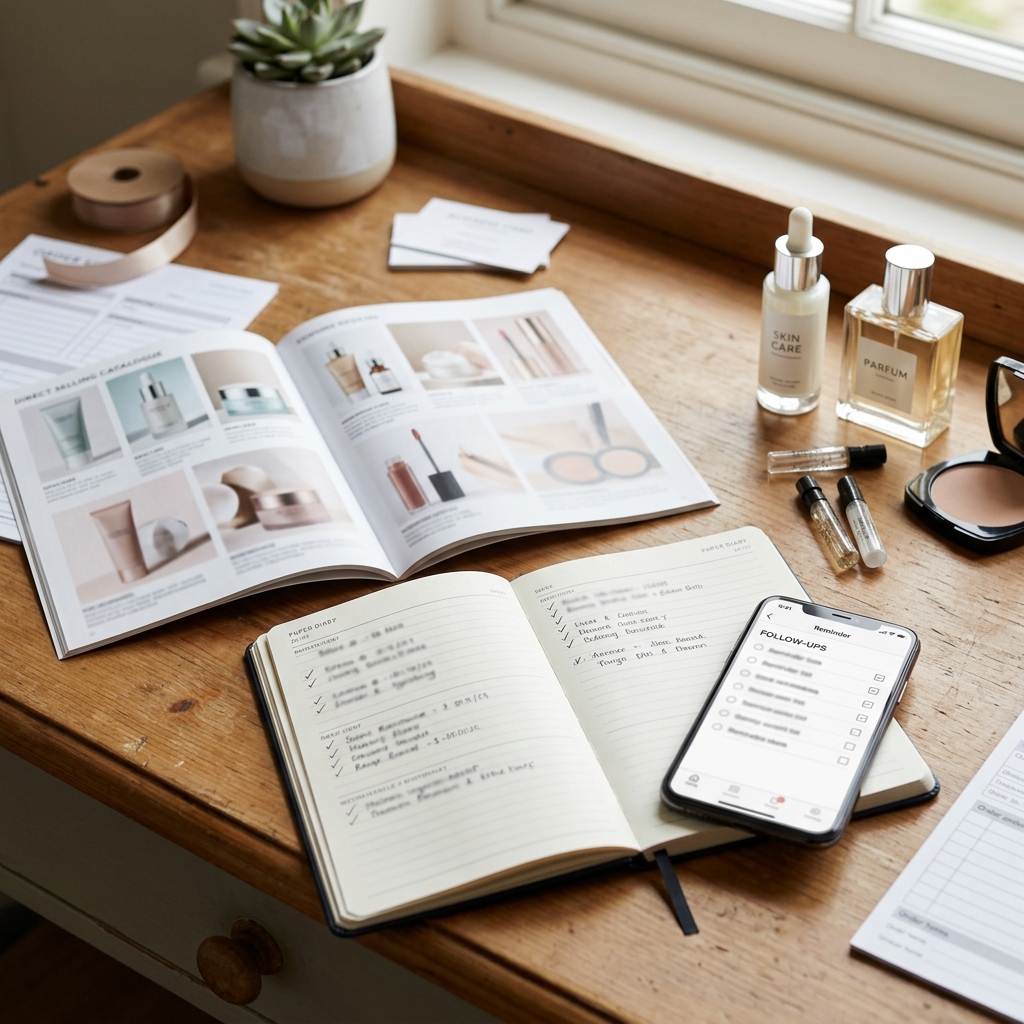
You may also have handwritten notes from brochure drops, order slips, delivery notes, payment checks and a diary reminder for the next round. When you are working solo, it is easy for these small follow-ups to pile up.
The wording matters as much as the timing. A good reminder needs to be timely, warm, clear and not pushy. You may want to remind a regular customer about a catalogue return, let someone know their order is due soon, update a customer about delivery, or gently follow up on a payment without making the message feel awkward.
AI can help with the part many representatives find fiddly: turning a rough note into a clear message. It can suggest a softer version, shorten a long reminder, or give you a few options for different channels. But AI does not know what is true in your business. It should not decide whether a customer has paid, whether an item has arrived, what a supplier rule says, or whether a reminder is the right thing to send.
What AI should and should not handle
Before using AI for independent beauty representatives workflows, set clear boundaries. This is especially important because reminders can involve customer names, addresses, phone numbers, order details, payment status and private conversations.
Good tasks for AI
- Drafting a friendly first version of a customer reminder.
- Softening a message so it sounds less abrupt.
- Creating a few wording options for WhatsApp, texts or social messages.
- Turning non-sensitive notes into a simple follow-up checklist.
- Helping you make a weekly or campaign-based reminder routine.
Tasks that must stay human-led
- Checking the customer name and contact details.
- Confirming the order record, quantity, price and delivery status.
- Checking whether a payment is outstanding.
- Following supplier rules, campaign dates and business policies.
- Deciding whether the timing and tone are appropriate for that customer.
- Choosing whether to send, delay, rewrite or not send the reminder at all.
Do not paste full names, addresses, phone numbers, bank details, payment screenshots, private messages or sensitive customer history into AI prompts. Use placeholders such as [Customer], [Catalogue], [Deadline] and [Order] instead.
The safest pattern is simple: AI helps you draft; you check, personalise and decide.
A simple AI reminder workflow for brochure rounds and order deadlines
You do not need a complicated system to start. The aim is to give yourself a repeatable routine that works with your current way of managing brochure rounds, order deadlines and customer follow-ups.
- Make a simple reminder list. Use initials, first-name placeholders or non-identifying labels rather than full customer details. For example: Customer A, catalogue return Friday or Regular customer, order deadline tomorrow.
- Sort reminders by type. Group them into brochure return, order deadline, delivery update, payment follow-up or thank-you message.
- Ask AI for a friendly first draft. Give it the type of reminder, the tone you want and placeholders for the details.
- Edit the draft so it sounds like you. Remove anything that feels too formal, too salesy or unlike the way you normally speak to customers.
- Check all facts against your own records. Confirm the deadline, order, payment status, delivery update and supplier information yourself.
- Send through the right channel. Choose WhatsApp, text, social message or another channel based on how you normally communicate with that customer.
- Record the next follow-up manually. Add the next step to your paper diary, phone reminder, spreadsheet, calendar, task list or approved system.
This workflow keeps the customer relationship in your hands. AI helps with wording and organisation, but you remain responsible for accuracy, judgement and timing.
Reminder message examples AI can help draft
The examples below are not scripts you must copy. They show the kind of short, polite wording AI can help draft. Always personalise the final message and check the facts before sending.
Brochure or catalogue return reminder
Hi [Customer], just a little reminder that I am collecting [Catalogue] on [Day]. No rush if you have already had a look, but if you would like anything, just let me know before then. Thank you.
Order deadline reminder
Hi [Customer], I am placing my next order on [Deadline]. If there is anything you would like from [Catalogue], please send it over when you can. No problem at all if not.
Delivery update
Hi [Customer], quick update on your order. I am expecting to have it ready for you around [Delivery timing]. I will confirm once I have checked everything. Thanks for your patience.
Polite payment follow-up
Hi [Customer], just a gentle reminder about the payment for your recent order. When you have a moment, could you please check this your side? Thank you.
Payment reminders need extra care. Before sending one, check your own payment records, order notes and any relevant supplier or business process. Do not rely on AI to know whether someone has paid.
When using AI, ask it to remove pressure phrases, exaggerated urgency or anything that sounds unlike you. In direct selling, a warmer message is often simply a clearer and more respectful one.
Safe prompt examples
Prompt for a catalogue deadline: I need a friendly customer reminder for a beauty catalogue deadline. Please draft a short WhatsApp-style message that sounds warm, helpful and not pushy. Do not mention pressure or limited availability. Use placeholders for customer name, catalogue name and deadline.
Use placeholders rather than real customer names or contact details. Check the actual deadline yourself before sending.
Prompt for softening a reminder: Please rewrite this reminder so it sounds softer and more natural for a regular customer. Keep it brief, polite and UK-friendly. Do not add offers, discounts or promises. Text to rewrite: [paste non-sensitive draft only].
Do not paste sensitive customer history, payment details, private conversations or supplier-specific claims into the AI tool.
Prompt for a brochure round checklist: Create a simple follow-up checklist for my brochure round using these non-sensitive notes: brochure drop, midweek reminder, order deadline, delivery update, payment check and thank-you message. Keep it practical for a solo beauty representative.
The checklist is only an organiser. You must still verify order details, payment status, delivery information and supplier rules in your own records.
Turning reminders into a repeatable routine
The real benefit of using AI for customer reminder messages direct selling work is not producing one clever message. It is making reminders less stressful and more consistent from one campaign to the next.
A simple campaign routine might look like this:
- Before brochure drop: prepare a short note for customers who usually like a reminder.
- Midway through the round: send a gentle check-in to customers who asked to browse.
- Order deadline: remind interested customers before you place the order.
- Delivery update: let customers know when you expect to deliver or when you will confirm.
- Payment check: carefully check your records before sending any payment follow-up.
- Thank-you or reorder note: where appropriate, send a friendly thank-you or future reminder.
Some representatives will manage this with a paper diary. Others may prefer phone reminders, a spreadsheet, a calendar or a task app. The tool matters less than having one place where you can see the next follow-up.
If you use a task app, you can turn AI-drafted reminders into recurring tasks and checklist items. For example, you might create a recurring order deadline prompt or a checklist for each brochure round.
One optional tool for this is Todoist, which can help keep reminder tasks and deadlines visible. It is not required, and it does not replace your supplier records, order sheets, payment checks or customer judgement.
Final review checklist before sending any AI-assisted reminder
Before sending any AI-assisted reminder, pause for a quick human check. This is especially important when the message relates to orders, delivery timing or payment.
- Is the customer information correct? Check the name, preferred channel and any details you plan to include.
- Have I checked the order, payment or delivery status myself? Use your own records, not the AI draft.
- Does the message sound like me? Edit any wording that feels too formal, too sales-led or unnatural.
- Is it warm and not pushy? Remove pressure phrases, exaggerated urgency and unnecessary chasing language.
- Have I removed private or unnecessary details? Keep the message clear without exposing customer information.
- Does it follow my supplier or business rules? Check the rules you work under before sending product, order or delivery claims.
- Is this the right channel and timing? Consider whether WhatsApp, text, social message or another route is most suitable.
- Would I be comfortable receiving this message? If not, soften it before sending.
AI can make the draft quicker to prepare, but the final responsibility sits with you. Your judgement is what keeps the reminder appropriate for the customer and the situation.
The 7-step customer reminder workflow
Use this as a simple repeatable process for brochure rounds, order deadlines, delivery updates and polite payment follow-ups.
- Capture safe notes. Write down the reminder need using initials, placeholders or non-identifying labels. Avoid full names, addresses, phone numbers, bank details, screenshots or private customer history.
- Choose the reminder type. Mark each item as brochure return, order deadline, delivery update, payment follow-up, thank-you note or reorder reminder.
- Prepare an AI prompt. Ask for a short, warm draft using placeholders. Tell AI not to add pressure, discounts, promises or supplier claims.
- Review the wording. Make sure the message sounds like you and suits the customer relationship.
- Check the facts manually. Confirm the order, deadline, payment status, delivery information and supplier rules using your own records.
- Send through your chosen channel. Use WhatsApp, text, social message or another normal customer route, depending on what is appropriate.
- Log the next step. Add the next follow-up to your diary, paper list, phone reminder, spreadsheet, calendar or task app.
Mini review before sending
- Have I used placeholders in AI rather than real customer details?
- Have I checked the facts myself?
- Is the tone friendly, clear and not pushy?
- Have I removed anything private, unnecessary or uncertain?
- Is this reminder suitable for this customer today?