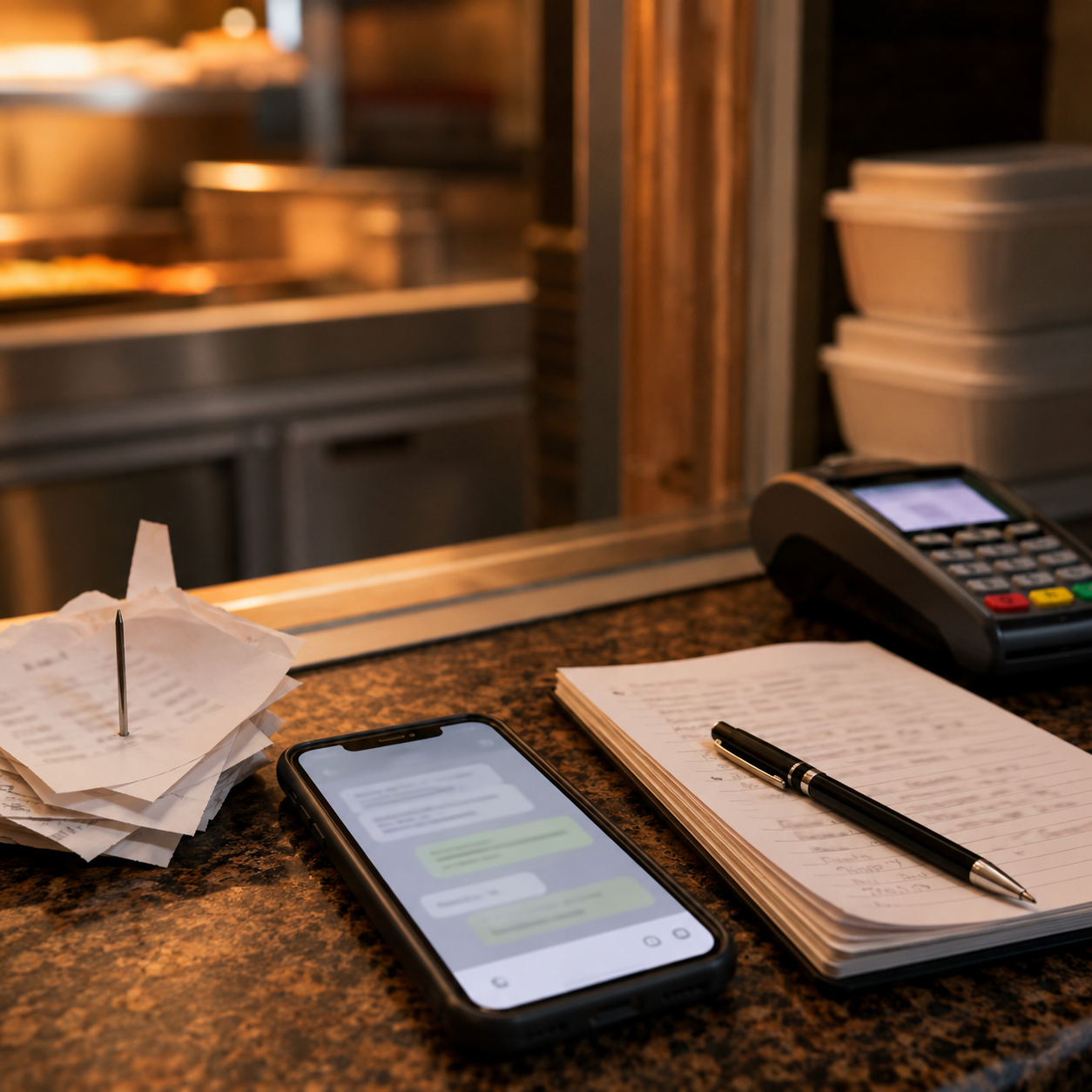
The kitchen is quiet. The last collection has gone. The delivery bags are back. But your phone still has a few things waiting: a review to answer, a customer message about a late order, a staff reminder for tomorrow, and maybe a Facebook post because Tuesday was quieter than expected.
That is where AI can be useful for an independent Indian takeaway owner. Not as a manager. Not as a replacement for your judgement. But as a first-draft assistant when you are too tired to find the right words.
This guide is about practical, safer ways to use AI for Indian takeaway owners after service. The aim is simple: let AI help you write calmer drafts, while you keep control of facts, promises, refunds, staff decisions, food safety matters and anything sensitive.
Quick answer: AI can help draft everyday takeaway messages after service, such as thank-you review replies, polite delivery issue responses, quiet-night social posts, supplier chasers, staff reminders and a short plan for tomorrow.
- Use AI for wording, structure and tone.
- Check names, dates, orders, prices, offers and opening times yourself.
- Do not let AI decide refunds, compensation, allergens, food safety wording, staff action, legal responses or platform disputes.
- Do not paste unnecessary customer, staff or order data into AI tools.
- Review every draft before sending, even if it looks harmless.
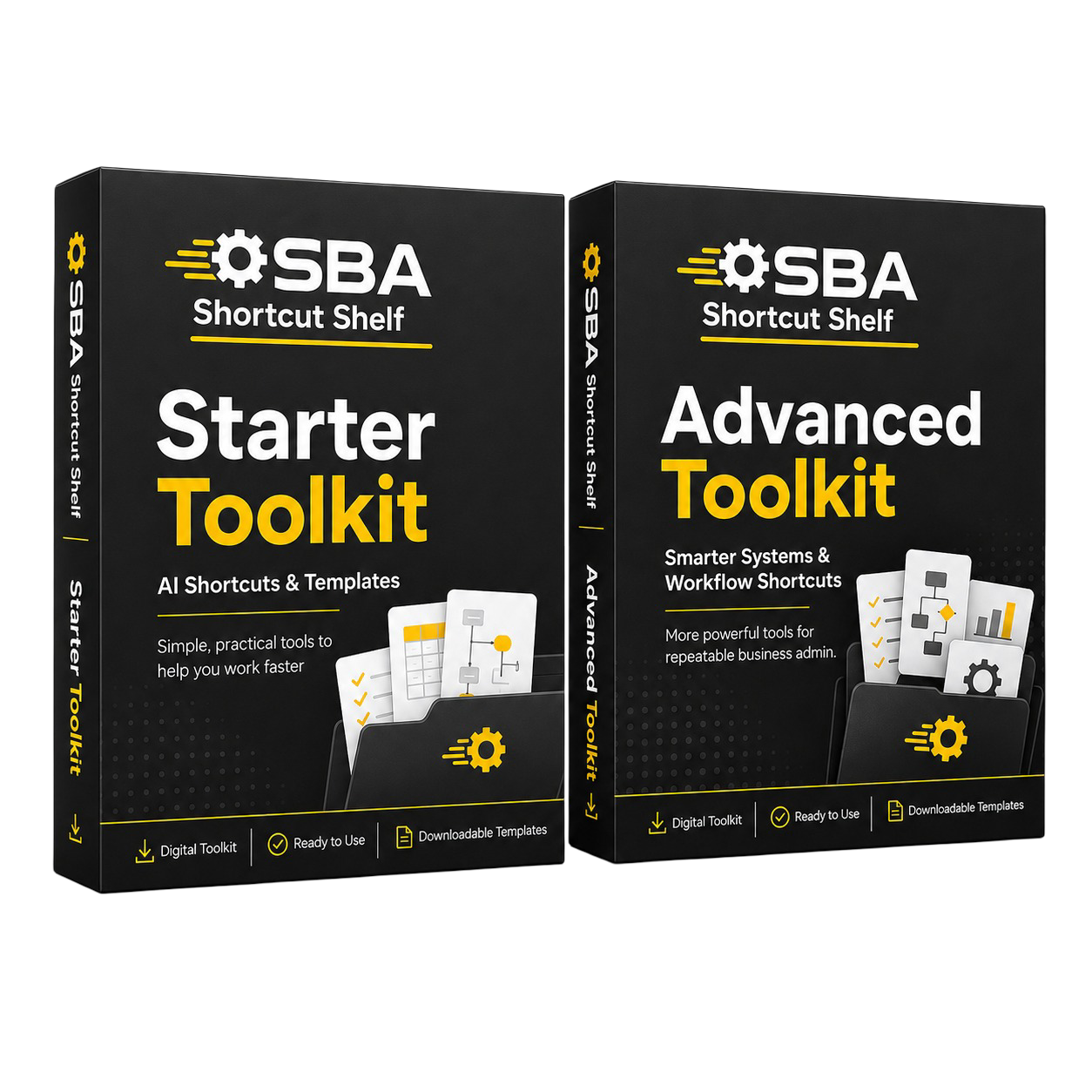
Want the shortcut version of this workflow? The Starter AI Toolkit for Independent Indian Takeaway Owners (UK) packages practical prompts and drafting structures for everyday messages such as review replies, customer notes, local posts and staff reminders. It is designed as a starting point for owners who still want to review facts, promises and sensitive decisions themselves.
Affiliate disclosure: This article may contain an affiliate link, which means SBA Shortcut Shelf may earn a commission, at no extra cost to you. For takeaway owners using approved offers to support repeat-customer loyalty after service, StampEzee is one option to consider.
Why after service is the safest time to use AI for drafts
During service, your attention belongs on orders, food quality, customers, drivers and staff. That is not the moment to experiment with AI or send messages you have not properly checked.
After service, you usually have a bit more space. You can look at rough notes, check what actually happened and turn quick thoughts into calmer wording. That makes after close a better time to use AI for first drafts.
Useful after-service tasks can include review replies, delivery issue follow-ups, staff reminders, supplier notes, local promotion drafts and a short plan for tomorrow. For example, you might ask AI to turn a blunt note like customer unhappy, late delivery, check order into a polite message you can review.
The important rule is this: AI should draft, the owner should decide. You provide the facts. You decide what is true. You decide what the business can offer. You decide whether the wording sounds like your takeaway before anything is sent.
A simple rule: let AI draft wording, not business decisions
The safest way to think about AI is to separate wording from judgement. AI can help phrase a message, soften a reply, summarise rough notes or suggest a few options. It should not make decisions that affect money, staff, safety, customer rights, platform rules or your reputation.
For example, AI may draft a polite apology for a delivery issue. But you decide whether to refund, replace an item, offer a discount or take no further action. AI may draft a staff reminder about checking bags before handover. But you decide the rota, training, warning or any other employment-related step.
The same applies to marketing. AI may suggest a quiet-night post for your local area, but you must check the offer details, dates, prices, delivery area, dishes and stock before posting. It should not invent a discount or promise availability you cannot honour.
As a practical boundary, AI is generally safer for lower-risk drafting. It needs extra care for complaints, delivery issues and offers. It should stay out of owner-only decisions such as refunds, compensation, allergen or dietary assurances, food safety explanations, staff discipline, legal threats, platform disputes and firm pricing terms.
This is practical communication guidance, not legal, HR, food safety or regulatory advice. If a message involves a serious complaint, allergen concern, staff issue, formal dispute or legal wording, use your own verified process and appropriate human judgement before responding.
The after-service AI drafting menu for takeaway owners
Not every message carries the same risk. A thank-you reply to a positive review is very different from a message about allergens, refunds or a formal complaint. A simple menu helps you choose what AI can reasonably help with after a busy shift.
Lower-risk first drafts
- Thank-you review replies: short, friendly replies to positive or neutral reviews.
- Neutral local updates: simple posts about opening, collections, delivery reminders or local community messages, with details checked by you.
- Supplier chasers: polite notes asking about missing invoices, delivery times or stock updates.
- Staff reminders: calm reminders about routine tasks, such as checking bags, cleaning down or updating prep notes.
- Tomorrow’s prep or admin checklist: a short planning list based on your own notes.
Use with extra care
- Delivery delay or missing item replies: AI can draft acknowledgement wording, but you must check the order and decide the next step.
- Complaint acknowledgements: AI can help you sound calm and non-defensive, but should not decide fault or compensation.
- Quiet-night offers: AI can suggest wording, but you must check offer terms, prices, dates, stock and staffing.
- Menu update wording: AI can help describe updates, but you must confirm dish names, prices, ingredients and availability.
- Review replies involving serious dissatisfaction: AI can help with tone, but you need to check facts and decide whether to follow up privately.
Where a takeaway already uses approved repeat-customer offers, StampEzee is one optional way to support digital loyalty and re-engagement activity. The owner should still decide the offer terms, check the wording and confirm that the promotion is appropriate before it is shared.
Keep owner-only
- Refunds, compensation, replacements or discounts.
- Allergen or dietary assurances.
- Food safety explanations.
- Legal threats or formal complaints.
- Staff discipline or employment action.
- Platform disputes or platform-policy decisions.
- Firm pricing, offer terms and delivery conditions.
Even lower-risk drafts need review before sending. A message can still sound too robotic, make a promise you did not intend, or include a detail that is not quite right.
Examples of AI drafts that can work well after a busy shift
Good AI prompts are not complicated. The main thing is to give the AI the channel, tone, facts and boundaries. Tell it what you want, but also what it must not do.
Review reply draft
For a review reply, ask for calm, personal wording that does not argue and does not reveal private order details.
Draft a short, friendly reply to this customer review for my Indian takeaway. Keep it calm and personal, do not argue, do not mention private order details, and do not promise a refund or free food. Leave a placeholder where I should add the customer name or dish if appropriate: [paste review].
Before sending, check the review yourself. Remove anything generic. Do not include private customer or order details. Decide separately whether any follow-up, refund or compensation is appropriate.
Delivery issue response draft
For delivery issues, AI can help you acknowledge the customer without sounding defensive. But it should not decide what happened or what the customer receives.
Turn these rough notes into a polite delivery issue response. Say we are sorry the customer had a poor experience and that we will check the order details. Do not admit a specific fault unless I have written it in the notes, and do not promise a refund, replacement or discount: [rough notes].
You still need to verify the order, check your own delivery process and decide any refund, replacement, discount or complaint handling step yourself.
Quiet-night local post draft
For quiet-night takeaway promotion ideas, AI can help you get past the blank screen. It can suggest local, friendly wording, but it must not invent prices, discounts or availability.
Draft three short quiet-night social media post ideas for my local Indian takeaway. Make them friendly and local, not pushy. Do not invent prices, discounts, opening times or dishes. Use placeholders for any offer details I need to check before posting.
Before posting, check stock, staffing, delivery area, dates, prices, offer terms and any platform rules that apply to where you are posting.
What not to ask AI
A poor prompt would be: Decide whether this customer deserves a refund and write the reply. That gives AI a business decision it should not make. A safer version is: Draft a polite acknowledgement that says we will check the order details. Do not promise any refund or replacement.
How to review an AI draft before you send it
The review step is where the owner earns the right to use the draft. Do not treat AI wording as ready just because it sounds polished. Polished can still be wrong.
Use this quick check before sending any AI-assisted message:
- Check the customer name and order details: make sure the message fits the right customer, order, date and issue.
- Remove robotic wording: cut phrases that sound too formal, too dramatic or unlike your takeaway.
- Check offers and practical details: confirm any price, discount, dish, date, opening time, delivery area or availability.
- Remove unapproved promises: delete any refund, replacement, discount, free item or compensation wording unless you have personally approved it.
- Watch sensitive topics: do not send AI-generated allergen, dietary, food safety, legal or employment wording without appropriate human judgement and your own verified process.
- Fit the channel: a WhatsApp message can be shorter and warmer; an email may need more structure; a review reply should be public, brief and careful.
- Protect personal data: avoid pasting unnecessary customer names, phone numbers, addresses, payment details, staff details or full order histories into AI tools. Use placeholders where possible.
- Ask the final test: does this sound like our business, and can we honour every word?
If the answer is no, edit it. If the message involves a serious complaint, allergen issue, formal dispute, staff matter or legal wording, slow down and handle it with proper human review.
A simple weekly routine: ten minutes of drafting after close
You do not need a big AI system to make this useful. A small routine after close is enough.
- Collect rough notes after service: reviews to answer, customer messages, supplier issues, staff reminders and tomorrow’s admin.
- Choose one or two draft types: do not try to fix everything in one sitting. Start with a review reply and a staff reminder, or a supplier chaser and a local post.
- Give AI the facts and boundaries: include the tone, channel, key facts and what not to promise.
- Review using the checklist: check details, tone, promises and sensitive topics before sending.
- Save useful wording: keep the best phrases for future review replies, delivery acknowledgements, supplier notes or quiet-night posts.
- Separate owner-only decisions: keep refunds, compensation, staff action, allergen matters, food safety wording, platform disputes and legal issues on a separate list for proper owner review.
The goal is calmer communication, not automated customer handling. AI can help you get a first draft on the screen when you are tired. It should not take over your judgement or speak for the business without you checking it.
After-service AI drafting menu
Use this as a quick safety map when you are closing down and deciding what to ask AI to draft.
1. Safer first-draft tasks
- Thank-you replies to positive reviews.
- Simple supplier chasers about stock, invoices or delivery times.
- Polite staff reminders about routine checks or tomorrow’s prep.
- Basic local updates with placeholders for times and details.
- Tomorrow’s prep, cleaning or admin checklist based on your notes.
Still check: names, dates, tone, opening times, dishes and whether the wording sounds like your takeaway.
2. Use with extra care
- Complaint acknowledgements.
- Delivery delay or missing item replies.
- Bad review replies where the customer is seriously unhappy.
- Quiet-night takeaway promotion ideas.
- Menu update wording.
Owner check needed: order facts, offer details, stock, staffing, delivery area, prices, platform requirements and any follow-up promises.
3. Keep owner-only
- Refunds, compensation, replacements or discounts.
- Allergen or dietary assurances.
- Food safety explanations.
- Staff discipline or employment action.
- Legal threats or formal disputes.
- Platform-policy decisions or disputes.
- Firm pricing and offer terms.
Bottom line: AI can help with the wording. The owner stays responsible for the decision.