You have ten quiet minutes between clients. There are two unread messages, a review you still need to answer, a cancellation to acknowledge and a social post you meant to write yesterday.
That is usually the moment when AI for salon owners starts to feel tempting. Not because you want a robot running the salon, but because you could do with a little help getting the words started.
The question is not simply whether your salon should use AI. A better question is: which salon task is safe and sensible to try first?
For most independent hair and beauty salons, the best first AI task is not the flashiest one. It is usually small, repeated and easy for you to check before anything is sent, posted or shared.
This guide treats AI as a drafting assistant, not an autopilot. It is practical communication guidance only, not legal, medical, HR, insurance, treatment safety or compliance advice. Anything sensitive still needs owner judgement and, where appropriate, qualified guidance.
Quick answer: a good first AI use for a UK salon is usually a low-risk drafting task such as appointment reminder wording, rebooking nudges, simple review reply drafts, quiet-slot social post ideas or internal weekly planning notes.
- Best first: short messages you already understand and can check quickly.
- Use with care: social captions, service wording, cancellation wording and local promotions.
- Keep human-led: treatment suitability, allergy or patch-test wording, medical-style concerns, refunds, complaints, safeguarding issues and staff matters.
AI can help prepare wording. You still decide what is true, appropriate, private and ready to send.
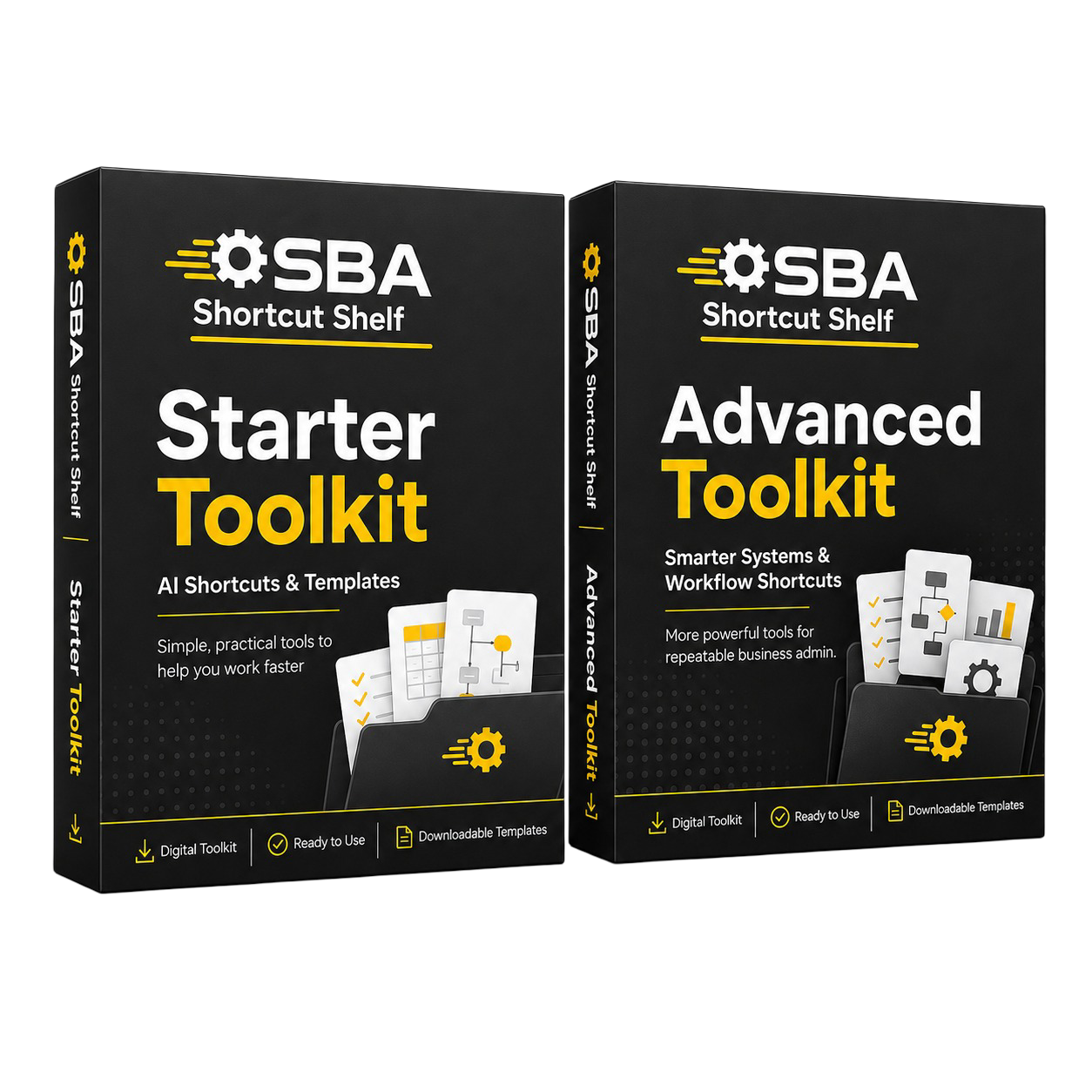
If you want copy-and-adapt prompts packaged for this kind of salon admin, the Starter AI Toolkit for Independent Hair and Beauty Salon Owners (UK) gives you a practical set of beginner-friendly AI prompts for common salon wording tasks. It is optional, but useful if you want a ready-to-use starting point rather than building prompts from scratch.
Affiliate disclosure: This article may contain an affiliate link, which means SBA Shortcut Shelf may earn a commission, at no extra cost to you. For salon owners using approved rebooking or lapsed-client offers to support repeat visits, StampEzee is one option to consider.
The safest first AI task is usually small, repeated and easy to check
Your first AI experiment should not be a full automated inbox, a complete client journey or anything that sounds like treatment advice. That is too much risk for a beginner and too easy to get wrong.
Start with a task you already know well. You are not asking AI to decide what should happen. You are asking it to give you a first draft, a few wording options or a calmer version of something you were already going to write.
Use this three-part test before choosing your first task:
- Is the task low-sensitivity? A reminder message is lower sensitivity than an allergy, complaint or refund reply.
- Does it happen often enough to be worth improving? A message you write every week is a better test than something that only appears once a year.
- Can you quickly check whether the draft is accurate and on-brand? You should be able to check the facts, tone and wording in under a minute.
Appointment reminder wording, rebooking messages, short social captions and simple review replies often pass this test. They are familiar, repeated and easy to compare against your diary, your salon voice or the client review in front of you.
The key rule is simple: client-facing AI drafts should be reviewed before sending or posting. Names, dates, times, prices, treatment names, offers and tone all need your eyes on them.
A simple decision matrix for salon AI first uses
When you are choosing where to start, do not judge the task only by how annoying it feels. Judge it by sensitivity, repeat frequency, ease of checking and usefulness to the salon.
Here is a practical judgement framework for common salon tasks. It is not a legal or compliance ranking. It is a simple way to decide where a beginner should and should not experiment first.
- Appointment reminders: low sensitivity, high repeat frequency, easy to check, useful for everyday admin. Recommendation: Best first.
- Rebooking nudges: low to medium sensitivity, repeated often, easy to adapt, commercially useful when kept low-pressure. Recommendation: Best first.
- Review replies: low to medium sensitivity, repeated occasionally, easy to compare with the review. Recommendation: Good first with review.
- Quiet-slot social posts: low to medium sensitivity, useful when the diary has gaps, needs a brand and accuracy check. Recommendation: Good first with brand check.
- Service description wording: medium sensitivity, useful for menus and website copy, needs careful accuracy checking. Recommendation: Useful with accuracy check.
- Weekly planning notes: low sensitivity when kept internal and non-personal, repeated weekly, easy to review. Recommendation: Low-risk internal use.
- Cancellation or no-show wording: medium sensitivity, can be emotional, needs policy and tone checking. Recommendation: Use with care.
- Treatment suitability or allergy-related replies: high sensitivity, not suitable as an early AI experiment. Recommendation: Keep human-led.
- Refund or complaint replies: high sensitivity, can affect trust and money. Recommendation: Keep human-led or use only for tone polishing.
- Staff performance or employment messages: high sensitivity, affects people and working relationships. Recommendation: Keep human-led.
If two tasks look equally useful, choose the one that is easier to check and less sensitive. That usually gives a salon owner a better first experience with AI.
Best first options: reminders, rebooking nudges and simple review replies
The easiest AI tasks are short, familiar and factual. You already know what the message should achieve. You just want a warmer, clearer or quicker starting point.
Appointment reminder wording
AI can help you draft a few reminder options with placeholders for the client name, appointment date, appointment time and treatment. This is useful because reminder wording is repetitive and often follows the same pattern.
Before sending, check every detail against the appointment book. Do not let AI add cancellation policy wording, fees, treatment promises or extra instructions unless those are already correct for your salon and you have chosen to include them.
Rebooking nudges
A rebooking nudge after a completed appointment can be friendly and low-pressure. AI can help you avoid wording that feels too salesy or awkward, especially when you are trying to sound natural.
For example, you might ask for three versions: one warm, one very short and one slightly more personal. You would then adapt the draft to the real client, real service and your salon voice.
Where a salon already uses approved rebooking or lapsed-client offers, StampEzee is one optional way to support digital loyalty and repeat-visit campaigns. The salon owner should still control the offer, client wording, consent and timing.
Simple review replies
AI review replies for salons can be useful when you are staring at a blank reply box. The safest use is to ask for short, polite options, then choose and edit one yourself.
Keep review replies warm, brief and factual. Do not argue publicly, do not reveal private client details and do not try to solve a sensitive complaint in the public reply. If a review raises something sensitive, use AI only with care, and keep the substance human-led.
Good with care: social posts, service wording and quiet-slot promotions
AI social posts for salons can be helpful, especially when you know you should post but cannot think of an angle. The risk is not usually the caption itself. The risk is letting the draft invent details, overpromise results or sound nothing like your salon.
Quiet-slot social posts are a good example. AI can suggest gentle angles such as a calm afternoon appointment, a last-minute space or a reminder to book ahead. You must still add only genuine availability and remove any false urgency.
Local promotion ideas can also be useful as brainstorming, not as ready-made offers. Check that any price, package, timing or treatment wording is real before using it. If the AI adds a discount you did not offer, remove it.
Service description wording needs extra care. AI can help simplify treatment menu wording or make a retail product message easier to read, but it should not invent treatment outcomes, suitability advice, before-and-after claims or guarantees.
Use AI here as a wording helper: make this clearer, shorter, warmer or more in our tone. Then check the final wording against what your salon actually offers and how you would say it to a client face to face.
Keep human-led: sensitive client, treatment, refund and staff wording
Some salon messages are not good first AI experiments. That does not mean you can never use AI around them, but the role of AI should be limited and carefully reviewed.
Keep these areas human-led:
- Patch-test, allergy or reaction messages.
- Treatment suitability questions.
- Medical-style, skin or scalp concerns.
- Refunds, complaints or disputes.
- Safeguarding or vulnerable-client issues.
- Staff performance, pay, dismissal, rota disputes or employment matters.
With these topics, AI should not be treated as the authority on what is correct, lawful, safe or clinically appropriate. At most, it may help you organise your thoughts, make a draft calmer or turn a rough note into clearer wording.
The substance must come from the salon owner, the salon’s own procedures and appropriate qualified guidance where needed. If the message could affect someone’s health, money, work, privacy or trust in the salon, slow down and review it properly before using any wording.
Also be careful with what you put into prompts. Avoid pasting sensitive client details, private staff information, dispute details or medical-style information into AI tools. Use placeholders where possible, such as client name, appointment date or treatment type, and follow your own salon procedures for handling private information.
How to review an AI draft before you send it
The review step is what makes AI useful rather than risky. A draft may sound polished and still be wrong, too pushy or not quite you.
Before you send or post any AI-assisted salon wording, run through this checklist:
- Check the facts: names, dates, times, treatment names, prices, availability and locations.
- Remove anything invented: offers, policies, discounts, guarantees, outcomes or instructions you did not provide.
- Check the tone: does it sound like your salon, or like a generic brand?
- Remove guarantees and medical-style claims: especially around treatment results, suitability, skin, scalp, allergy or reactions.
- Protect privacy: do not reveal private client details in review replies, social posts or messages.
- Soften anything defensive: especially with reviews, complaints or cancellations.
- Remove pressure: rebooking and quiet-slot messages should still feel warm and optional.
- Confirm it is appropriate: if the topic is sensitive, keep it human-led and seek suitable guidance where needed.
Start with one task for one week. For example, use AI only for appointment reminder wording, or only for three quiet-slot caption ideas. Do not try to use it across messages, reviews, social posts, treatment wording and staff notes all at once.
After a week, ask yourself: was it easy to check, did it sound like us, and did it make the task feel easier without creating extra risk? If yes, you can add a second low-risk use case.
Which salon AI task should you try first?
Use this decision matrix when you are choosing your first AI for hair and beauty salons use case. Pick one task that is low enough risk, frequent enough to matter and easy enough for you to review quickly.
Salon AI first-use matrix
- Appointment reminder wording: Sensitivity: Low. Repeats: Often. Ease of checking: Easy. Commercial usefulness: Useful for everyday client communication. Recommendation: Best first.
- Rebooking nudges: Sensitivity: Low to medium. Repeats: Often. Ease of checking: Easy. Commercial usefulness: Useful when kept natural and low-pressure. Recommendation: Best first.
- Simple review replies: Sensitivity: Low to medium. Repeats: Sometimes. Ease of checking: Easy if the review is straightforward. Commercial usefulness: Helps maintain a warm public tone. Recommendation: Good first with review.
- Quiet-slot social posts: Sensitivity: Low to medium. Repeats: Sometimes. Ease of checking: Moderate. Commercial usefulness: Helps you show up consistently. Recommendation: Good first with brand check.
- Service description wording: Sensitivity: Medium. Repeats: Occasionally. Ease of checking: Moderate. Commercial usefulness: Useful for menus, website copy and treatment descriptions. Recommendation: Useful with accuracy check.
- Weekly planning notes: Sensitivity: Low if kept internal and non-personal. Repeats: Weekly. Ease of checking: Easy. Commercial usefulness: Useful for organising the week. Recommendation: Low-risk internal use.
- Cancellation or no-show wording: Sensitivity: Medium. Repeats: Sometimes. Ease of checking: Moderate. Commercial usefulness: Useful, but tone matters. Recommendation: Use with care.
- Treatment suitability or allergy wording: Sensitivity: High. Repeats: Occasionally. Ease of checking: Not suitable for quick checking. Commercial usefulness: Not the priority for a first AI task. Recommendation: Keep human-led.
- Refund or complaint replies: Sensitivity: High. Repeats: Occasionally. Ease of checking: Difficult because context matters. Commercial usefulness: Important, but risky. Recommendation: Keep human-led or use only for tone polishing.
- Staff performance or employment messages: Sensitivity: High. Repeats: Occasionally. Ease of checking: Difficult because people and context matter. Commercial usefulness: Not a beginner AI task. Recommendation: Keep human-led.
Three safe starter prompts
Prompt 1: appointment reminders
Write three warm, brief appointment reminder message options for a UK hair and beauty salon. Keep them friendly, not pushy. Leave placeholders for client name, appointment date, appointment time and treatment. Do not add policy wording or extra promises.
Safety note: check the client name, date, time, treatment and any cancellation wording before sending. Do not let AI invent policy details.
Prompt 2: rebooking nudges
Draft a friendly rebooking message for a client who has just had an appointment. Keep it natural and low-pressure. Mention that they can reply if they would like help finding their next slot. Do not mention discounts, prices or treatment results.
Safety note: adapt it to the real service, timing and salon voice. Avoid promises about results or pressure to book.
Prompt 3: quiet-slot social posts
Give me five short social post ideas for a quiet afternoon slot at an independent beauty salon. Keep the tone local, calm and welcoming. Do not invent prices, treatment claims or limited offers.
Safety note: add only genuine availability, real prices if used and accurate treatment wording. Avoid exaggerated claims or false urgency.